|
| Textural drawing - white emulsion and charcoal |
Drawing and the word
‘nemesis’ spring to mind! A major breakthrough in my mind-set during this
module has removed the nemesis from my approach to the practice of drawing. I
have over the past few months allowed myself to appreciate that it’s all about
supporting the development of ideas. At last embracing the concept of drawing,
and yes, I agree, it is critical in the development of abstract art. The
old school approach of drawing with pencil on paper is still extremely relevant
but the contemporary approach to drawing embraces photography, inks, paint,
technological approaches, sound, and light among others this realisation has
freed me from the mental constraints of the world of graphite.
My natural working
practice is the abstract form. I struggled with the confines of pencil as my
work is all about colour and evoking emotion. Experimenting with photographic
drawings of light and mark making has been the trigger in achieving the
movement and colour in imagery to explore form and ideas, enabling me to develop
greater depth with my final pieces of work.
 |
| Technical notes on design |
 |
| Photographic development |
 |
| Glazing |
One of my biggest
challenges has been to allow myself to slow down development, to allow time to
play with image and different mediums, thus allowing my work to evolve in a
more thoughtful way. It has been interesting researching inspirational artists
such as Turrell, McCall, Hockney, Newmann and Suzi Morris among others. They
all approach drawing really differently depending on what they are out to achieve.
Lighting sculpturalist James Turrell has a very precise, diagrammatic
architectural approach which I embraced for designing the technical lighting
for my exhibition, in contrast Hockney who has revolutionised the acceptance of
drawing on the iPad. This has been the key to slowing my thinking down, I have
totally embraced this medium and it will play a major role in development of
ideas moving forward. Barnett Newmann actually failed his drawing exams (in the
traditional sense) but using charcoal in a non-figurative way developed his
iconic abstract work, this has widened my self-imposed boundaries of drawing.
By understanding the extremely varied drawing approaches these artists use I
have been able, for the first time, to really ‘get’ what this drawing is all
about.
Development of the
filament concept through photography of light sources (naked flames, bike
lights and a blowtorch) enabled me to explore mark making and colour in a
different way, I developed the ideas further, building on this imagery and drew
with paint, experimenting with glazes and most critically brush techniques.
Undoubtedly this approach led to an increased quality and thought provoking end
piece.
 |
| Graphite and printing ink |
Texture and drawing wasn't something I
thought possible until I started to experiment with thick emulsion paint and
made marks with the end of my paintbrush creating a textured surface, by
rubbing soft charcoal over the surface the lines and tones you can achieve
overlaid by the texture are inspiring. This approach will be valuable for
developing greater texture into my paintings, something to work on. Using the
printing press to overlay printing ink over graphite imagery to facilitate
blending of lines bringing movement into the drawing is certainly a development
process for building abstraction into a picture.
 |
| iPad drawing |
Dereck Jarmans drawings
were described by Tilda Swinton as - “The very battery of his working
process” I think these words really capture the essence and importance of
drawing in art practice. Recognising the breadth of the multitude of drawing
techniques has certainly moved my own practice forward; highlighting the
important role it plays in the development of ideas and pushing me to the next
level of maturity on my art journey.
 |
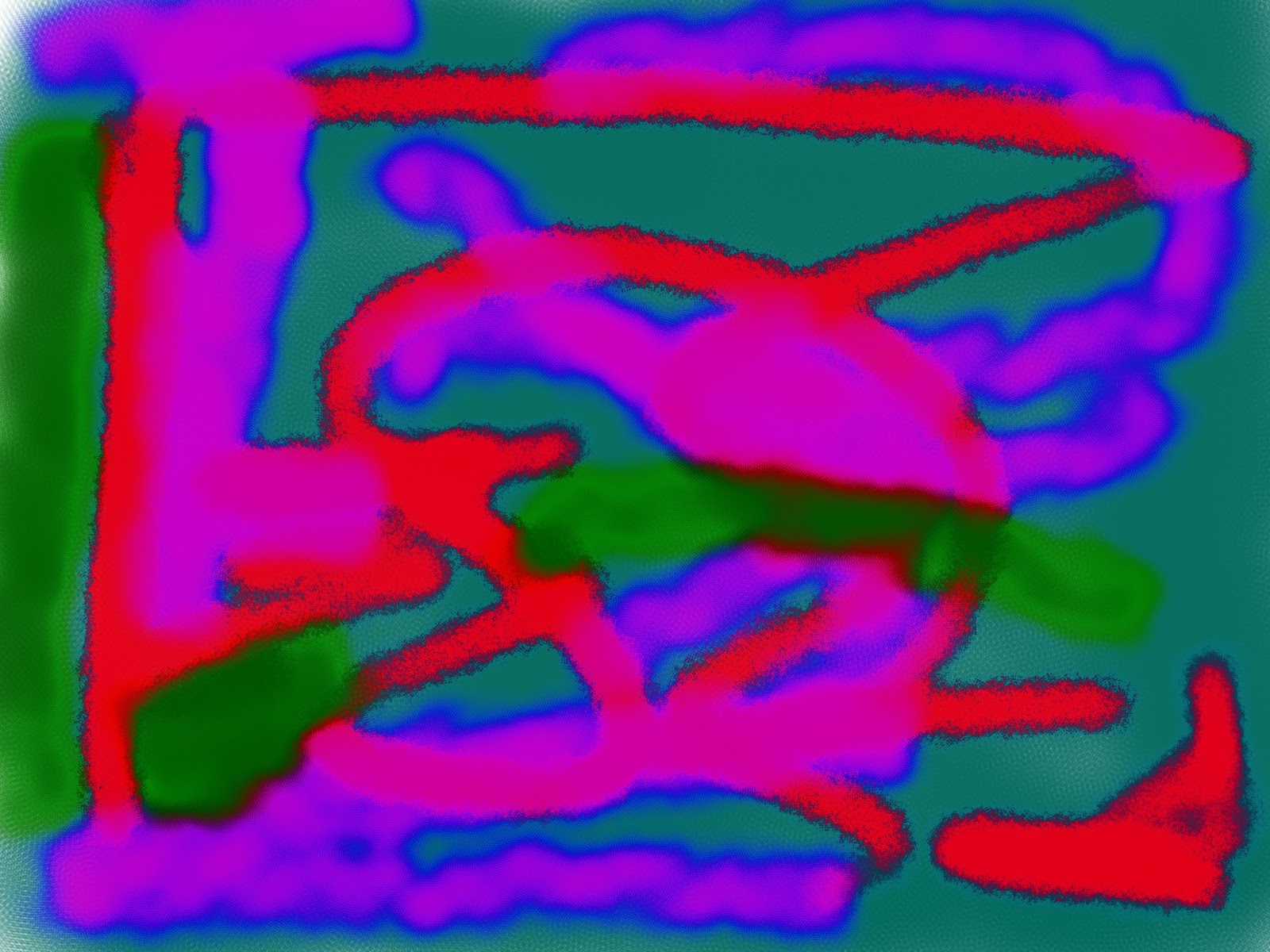
Dinosaur I
iPad |
 |
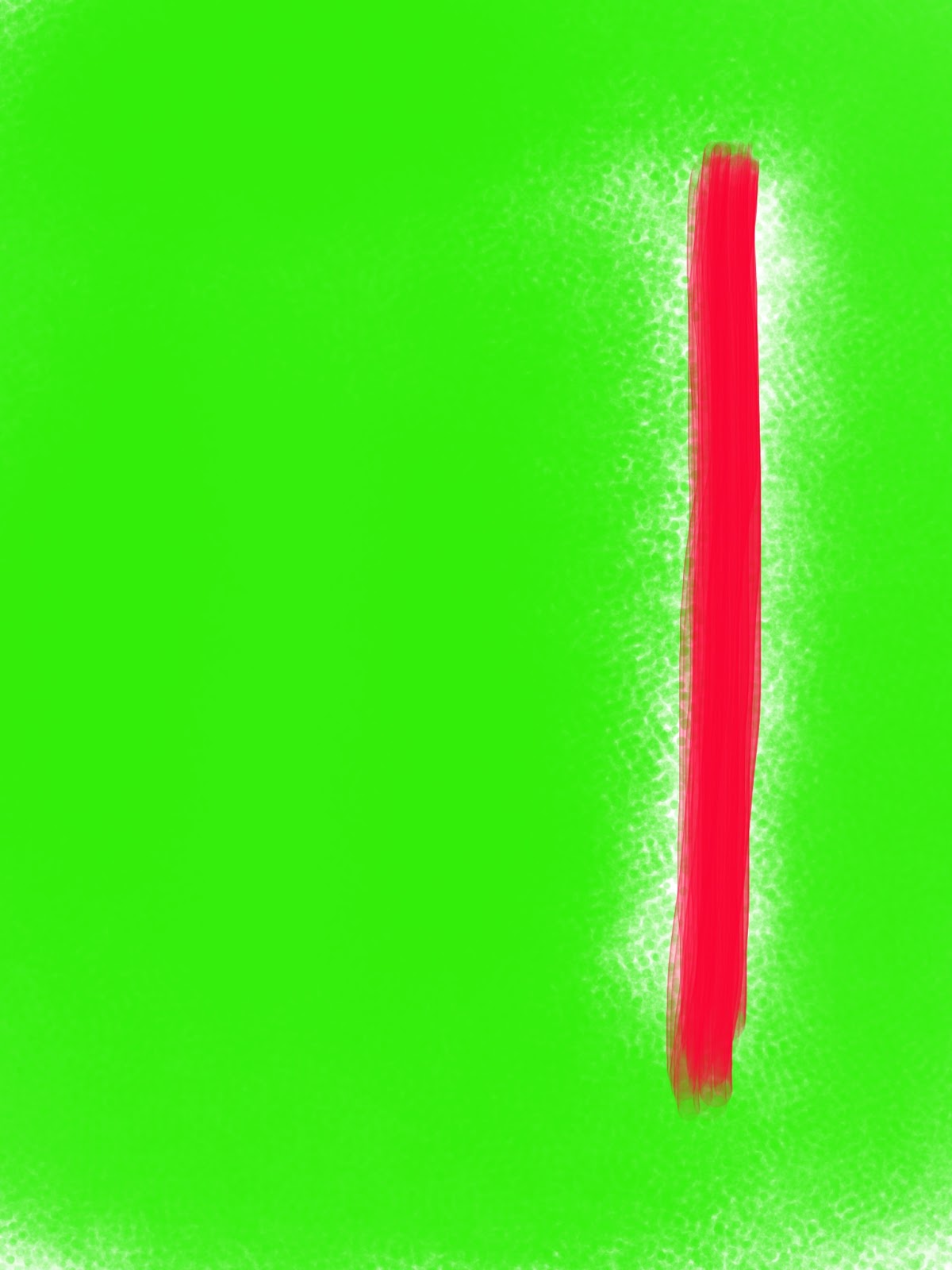
'Why not?'
iPad |
Pushing and evolving my
art moving forward I have realised drawing will, and has, started to play an
integral role in this. I plan to develop my skills using the iPad and photography;
it provides me an immediate feel for the use of colour in my work,
understanding how colours interact with each other and the balance of
composition. Whats really exciting is creating unexpected and exciting images, which
makes room for discovery and further exploration. Working on larger pieces of
paper with charcoal and inks provides a freedom and spontaneity of movement
that I don't get from smaller scale work, I can use this medium to channel my
instinctive ideas to develop and shape concepts further. I do however feel
there is also a place in my work for the more technical sketches in the
planning of space especially if I decide that lighting is going to play a part
in my presentation. In summary, it's going to be important for me to continue
to build on my current skills and techniques whilst remaining open to 'playing' by doing
this I feel the future is extremely exciting..... another door has just
opened!
References
Butler, C. H. (1999) Afterimage: Drawing through process. Cambridge, MA: Museum of Contemporary Art.
Davidson, M. (2011) Contemporary drawing: Key concepts and techniques for today’s fine artists. 1st edn. New York: Watson-Guptill Publications Inc.,U.S.
Farthing, S. and Webb-Ingall, E. (2013) Derek Jarman’s Sketchbooks. London: Thames & Hudson.
Govan, M. and Kim, C. Y. (2013) James Turrell: Seeing yourself see. Germany: PRESTEL ART BOOKS.
Jones, W. and Sagoo, N. (2011) Architects’ sketchbooks. 20110307th edn. London: Thames & Hudson, London.
New, J. (2005) Drawing from life: The journal as art. 1st edn. United States: Princeton Architectural Press.
O’Neill, J. P. and Newman, B. (1992) Barnett Newman: Selected writings and interviews. Berkeley, CA: University of California Press.